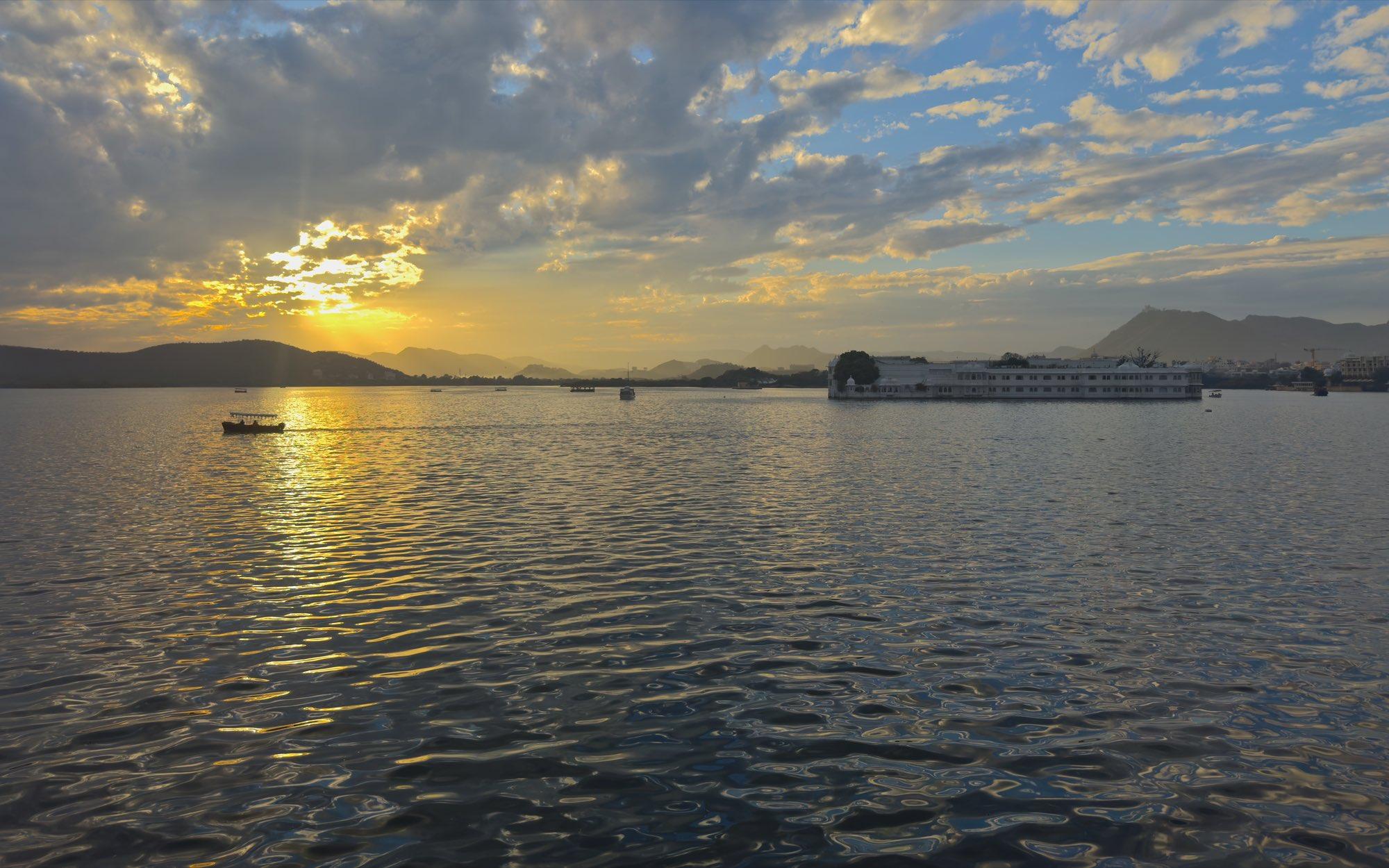
A lake before a city
A grain trader, remembered as Pichhu Banjara, dams a stream to water his oxen. The lake that forms takes the name of a nearby village: Pichola.
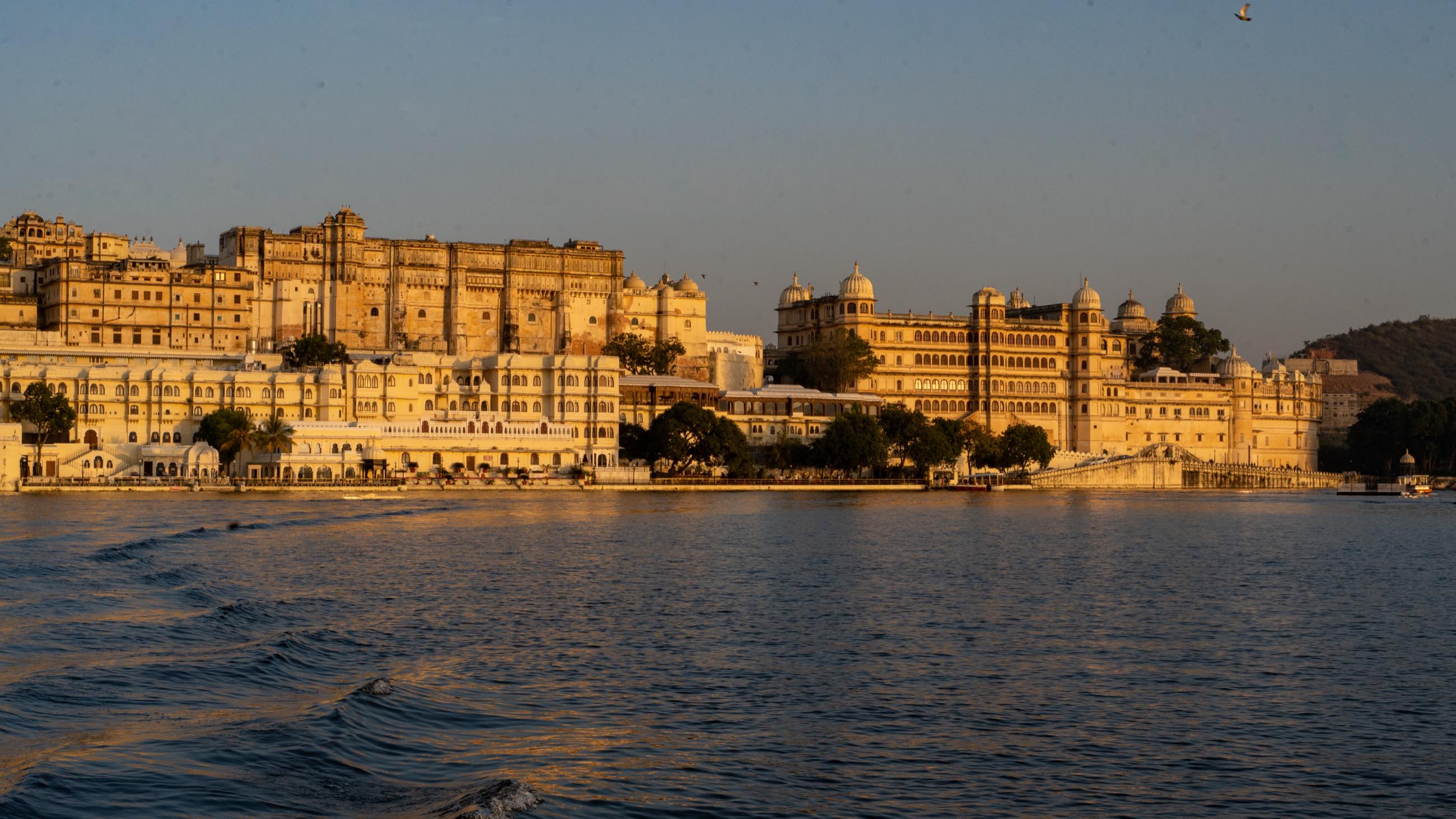
Mewar · Rajasthan · Since 1559
A city built on the water's edge, and on memory.
01Historyइतिहास
Udaipur was born from a retreat. When the old fortress at Chittor was no longer safe, the rulers of Mewar chose a valley ringed by the Aravalli hills, and a lake. Each Maharana after added a court, a gate, a garden. The palace never stopped growing.
जो दृढ़ राखे धर्म को, तिहि राखे करतार
“Those who hold fast to their dharma are protected by the Creator.”
Motto of the House of Mewar
1362
A grain trader, remembered as Pichhu Banjara, dams a stream to water his oxen. The lake that forms takes the name of a nearby village: Pichola.
1559
Hunting near the lake, Maharana Udai Singh II meets a sage who tells him to build here, where hills guard the valley. He lays the first stones of a palace on the ridge.
1568
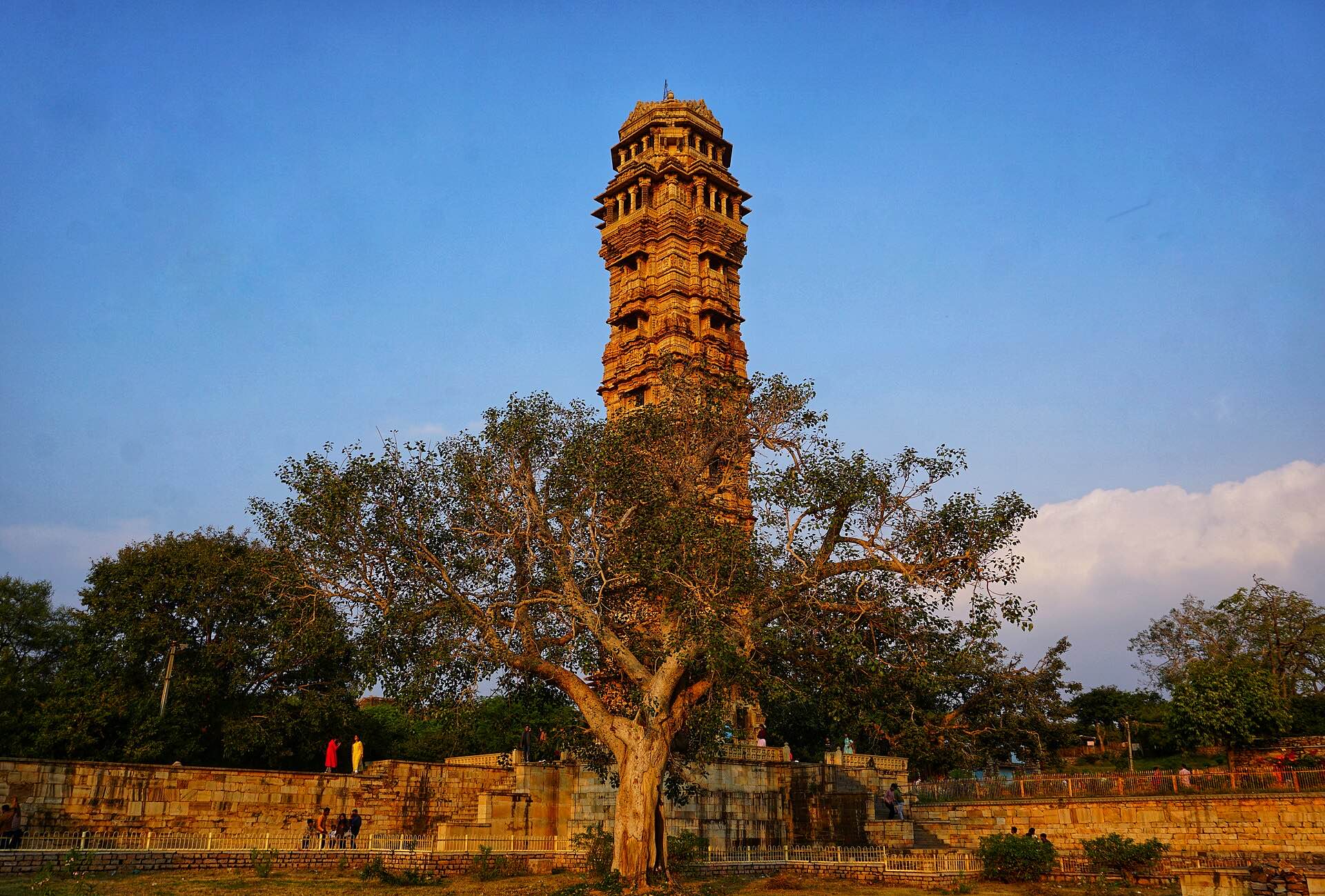
Akbar's army takes the old fortress of Chittorgarh. The court of Mewar moves for good to the new city by the lake.
1576
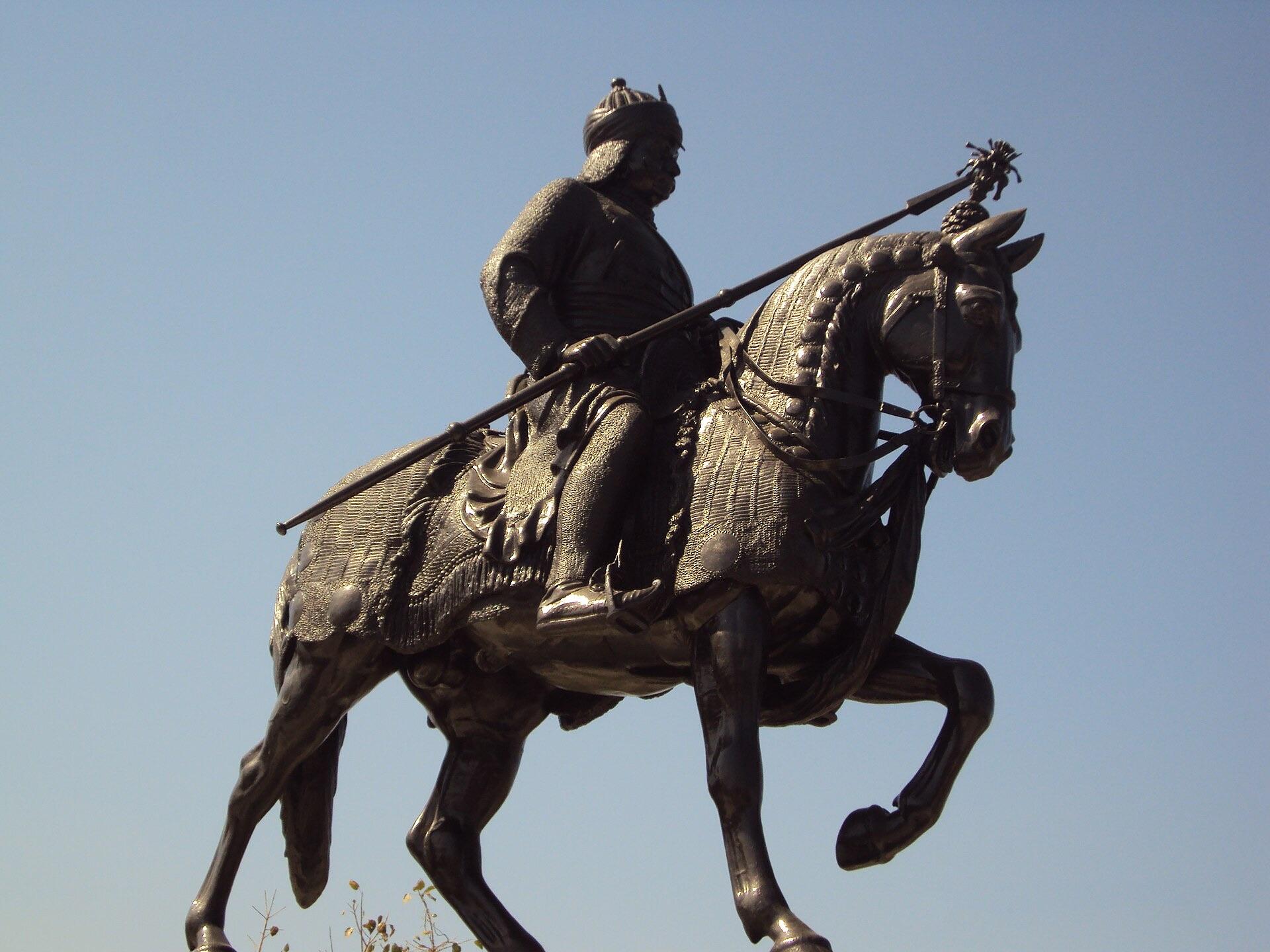
Maharana Pratap meets the Mughal army in a narrow yellow-earthed pass. He loses the field but never submits, and Mewar remembers him for that more than any victory.
1620s
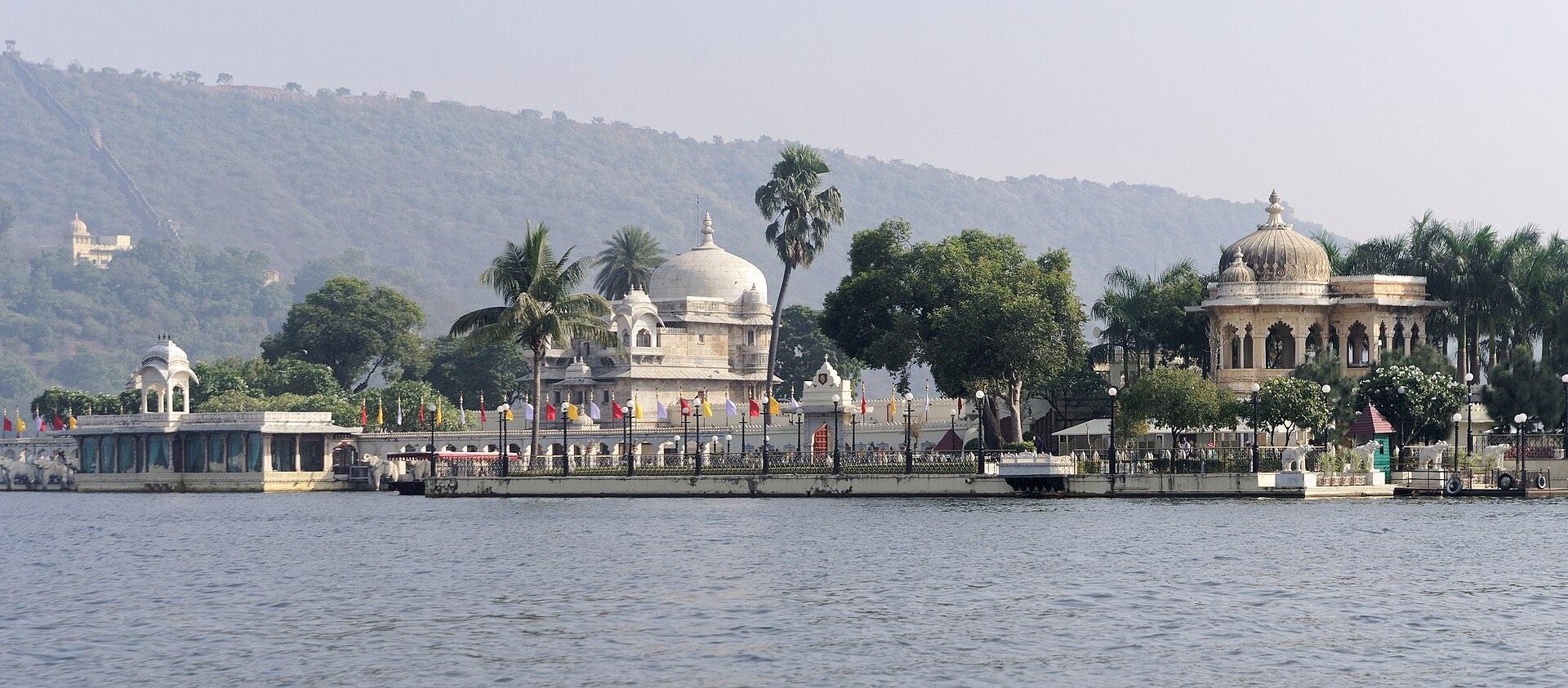
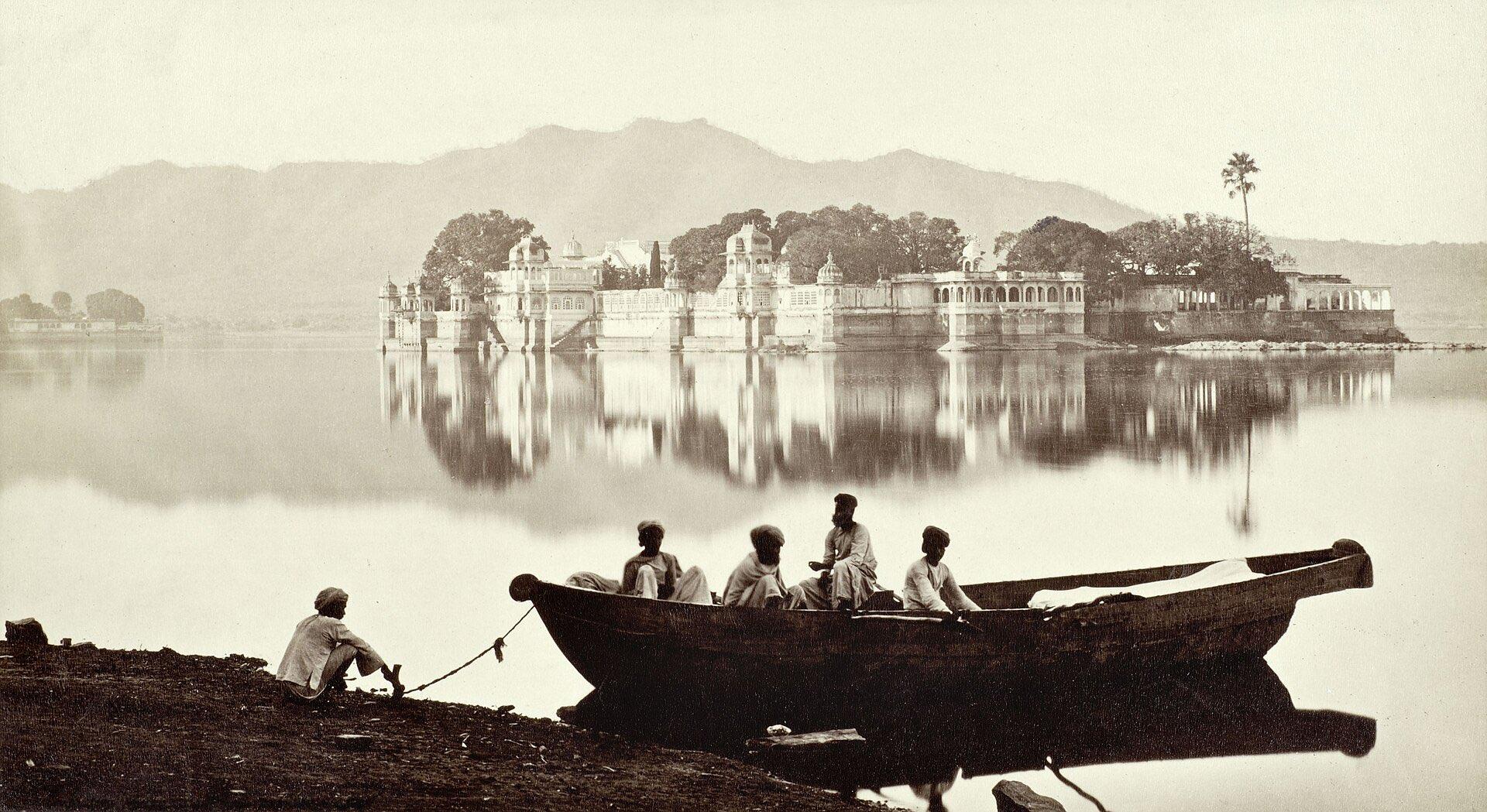
Jag Mandir rises on an island in Pichola. Prince Khurram, the future Shah Jahan, shelters there while in revolt against his father.
1743
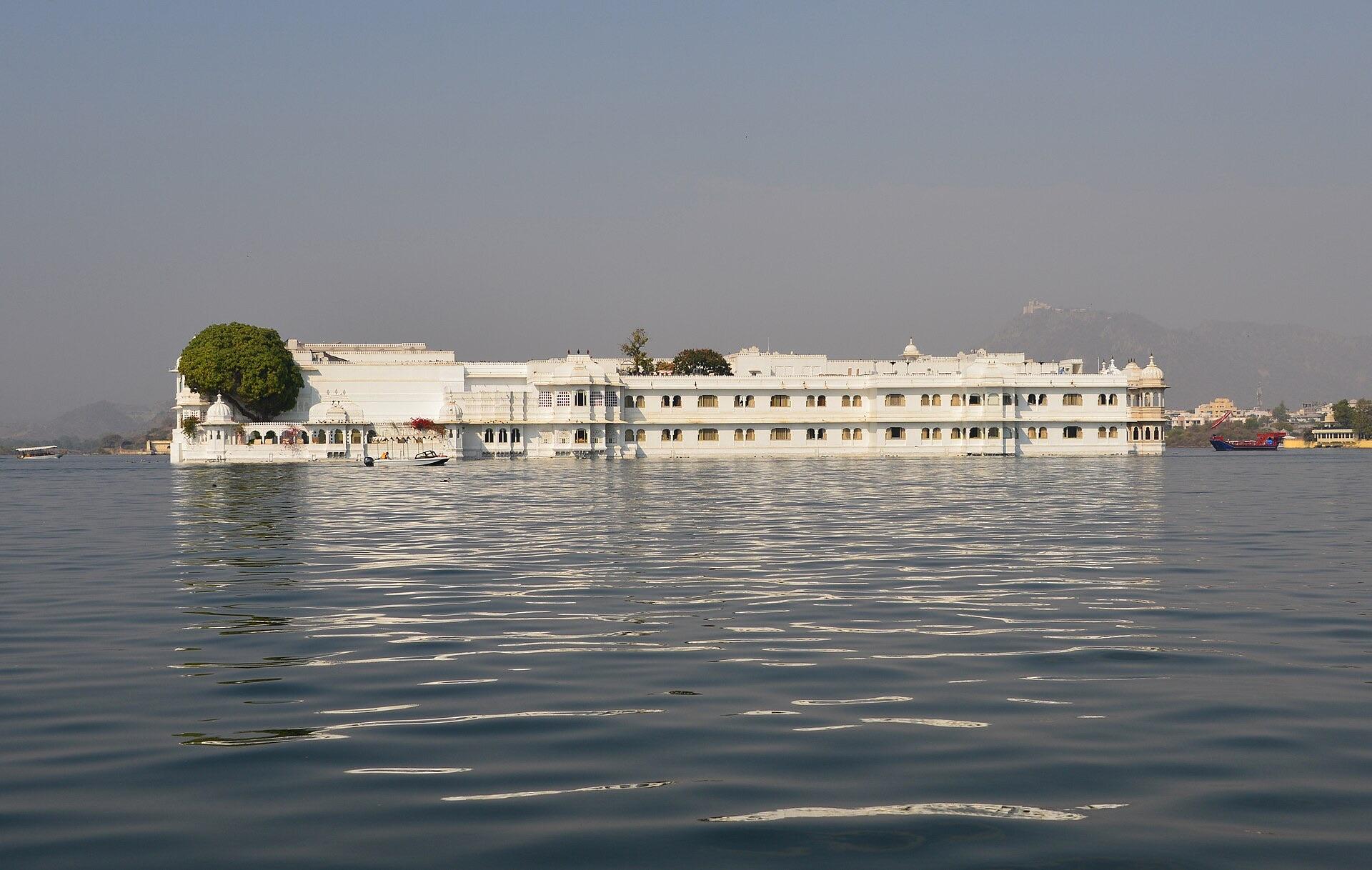
Maharana Jagat Singh II begins Jag Niwas on a second island. From the City Palace windows it looks as if it rests on the water itself.
1818
Worn down by decades of raids, Mewar signs a treaty with the British East India Company. The palace keeps growing: glass, crystal and painted halls.
1948
Mewar joins the union that becomes the state of Rajasthan. The palace that took four centuries to build opens its courts to visitors.
02The Palaceराजमहल
Eleven palaces joined into one, climbing a ridge above Lake Pichola in granite and marble. Choose a court to look through its window.
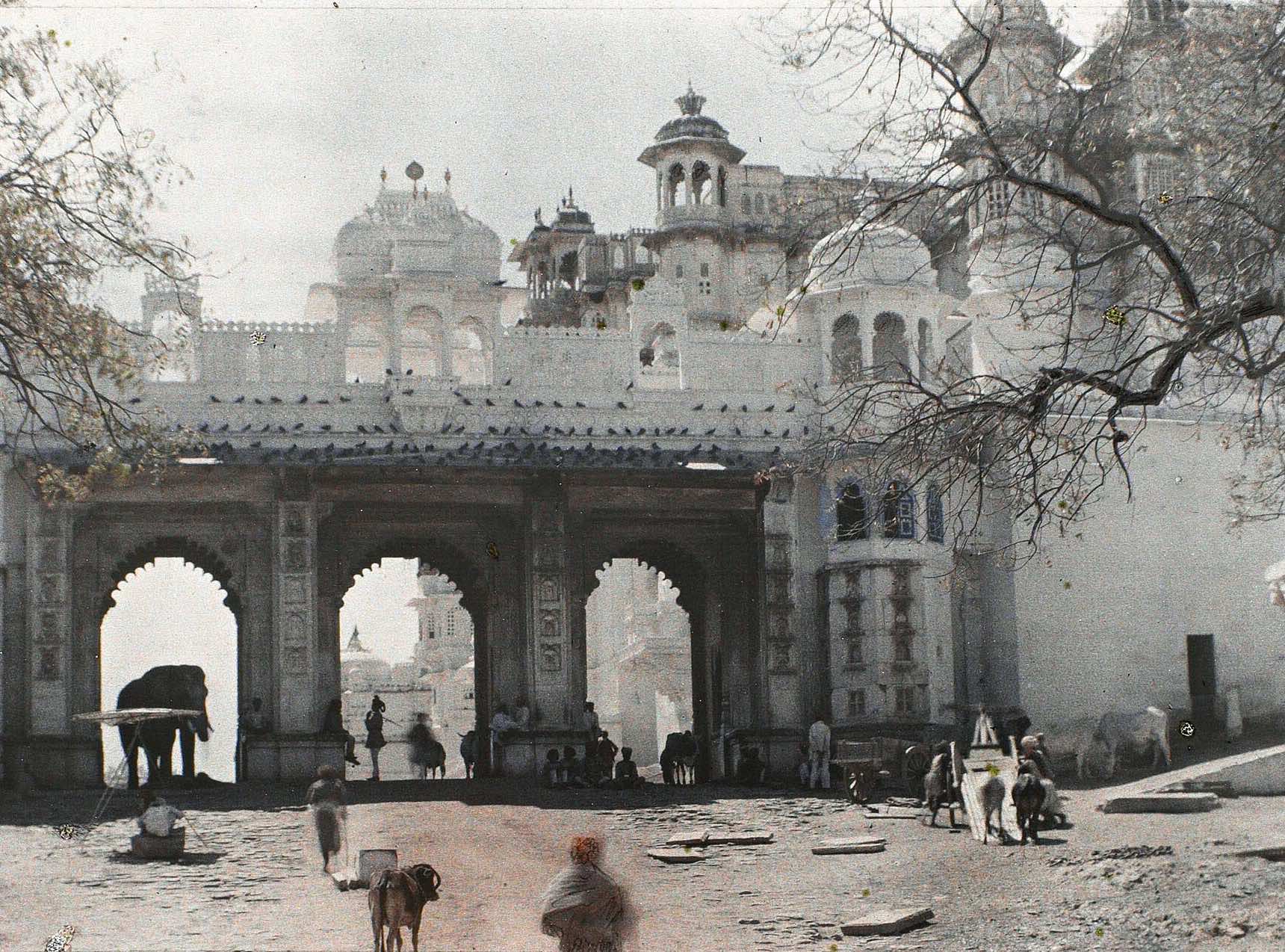
Gate · c. 1600
The Great Gate. Through it, past the triple-arched Tripolia, kings were once weighed against gold and silver given away to the people.
03Cultureसंस्कृति
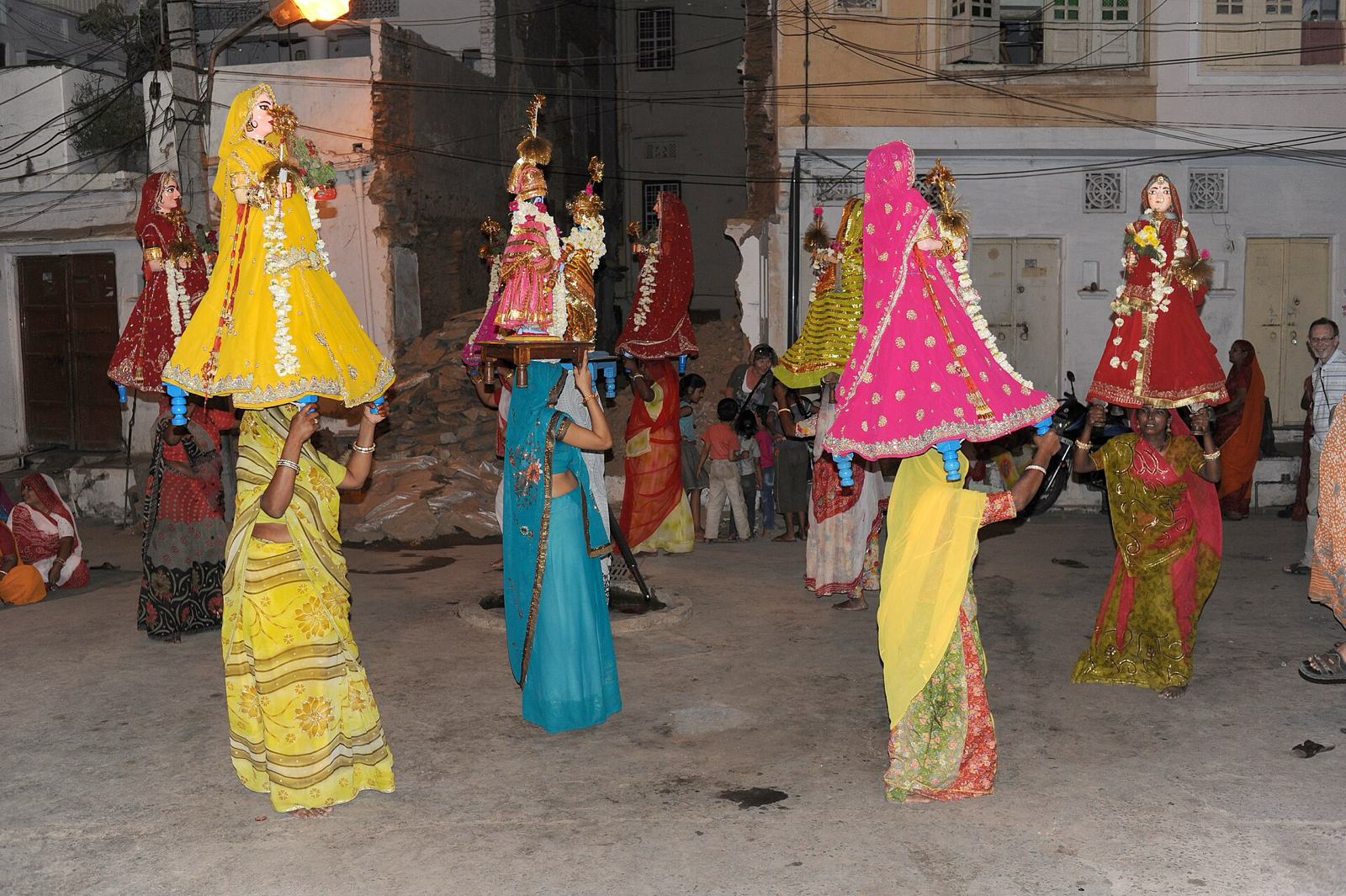
Chaitra · March–April
Women carry painted idols of Gauri to the ghats of Pichola. Boats lit with lamps cross the water at dusk.
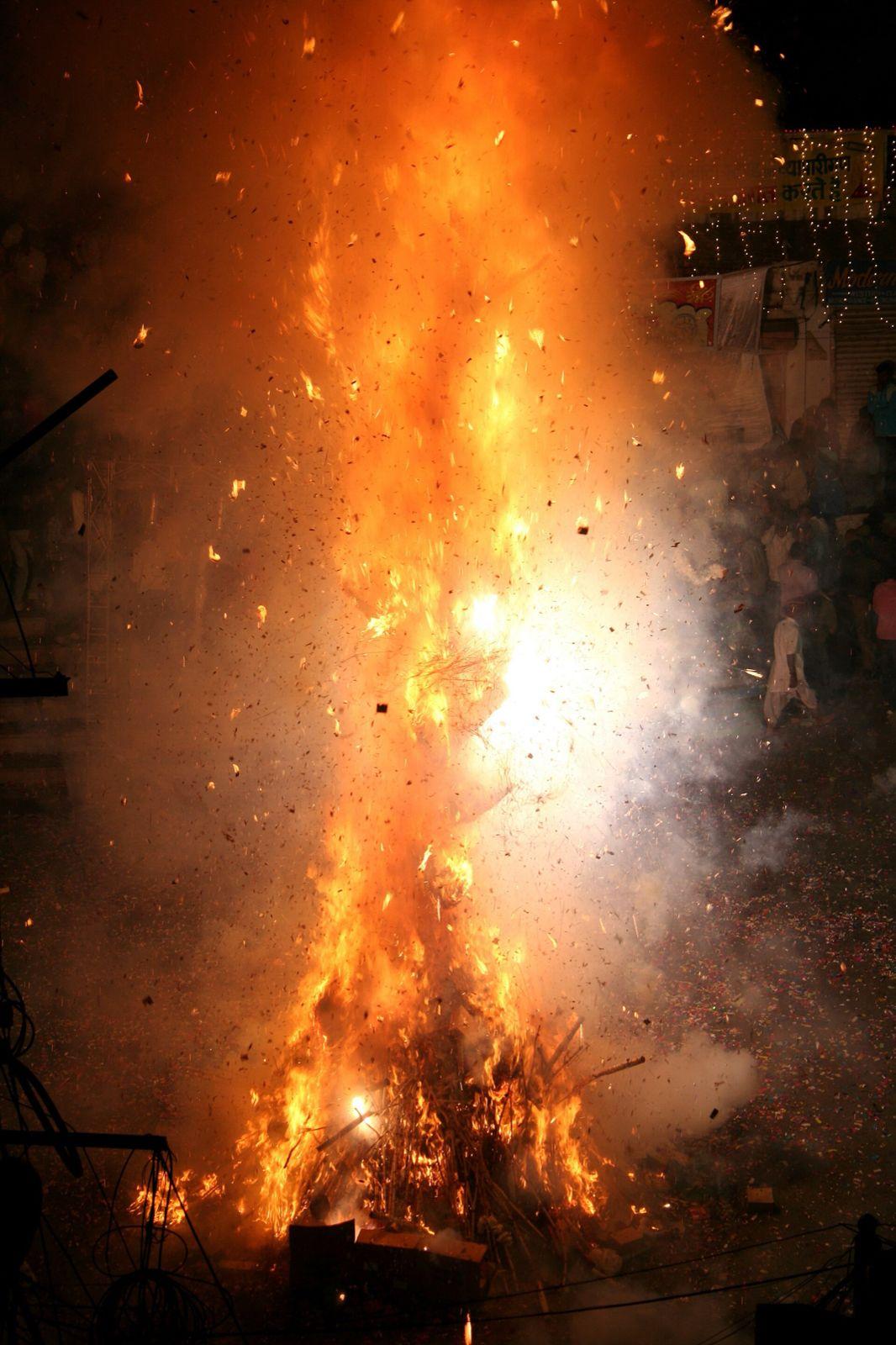
Phalgun · March
A bonfire in the palace courtyard on the eve of Holi. Horses, bands and the royal family gather around the flames.
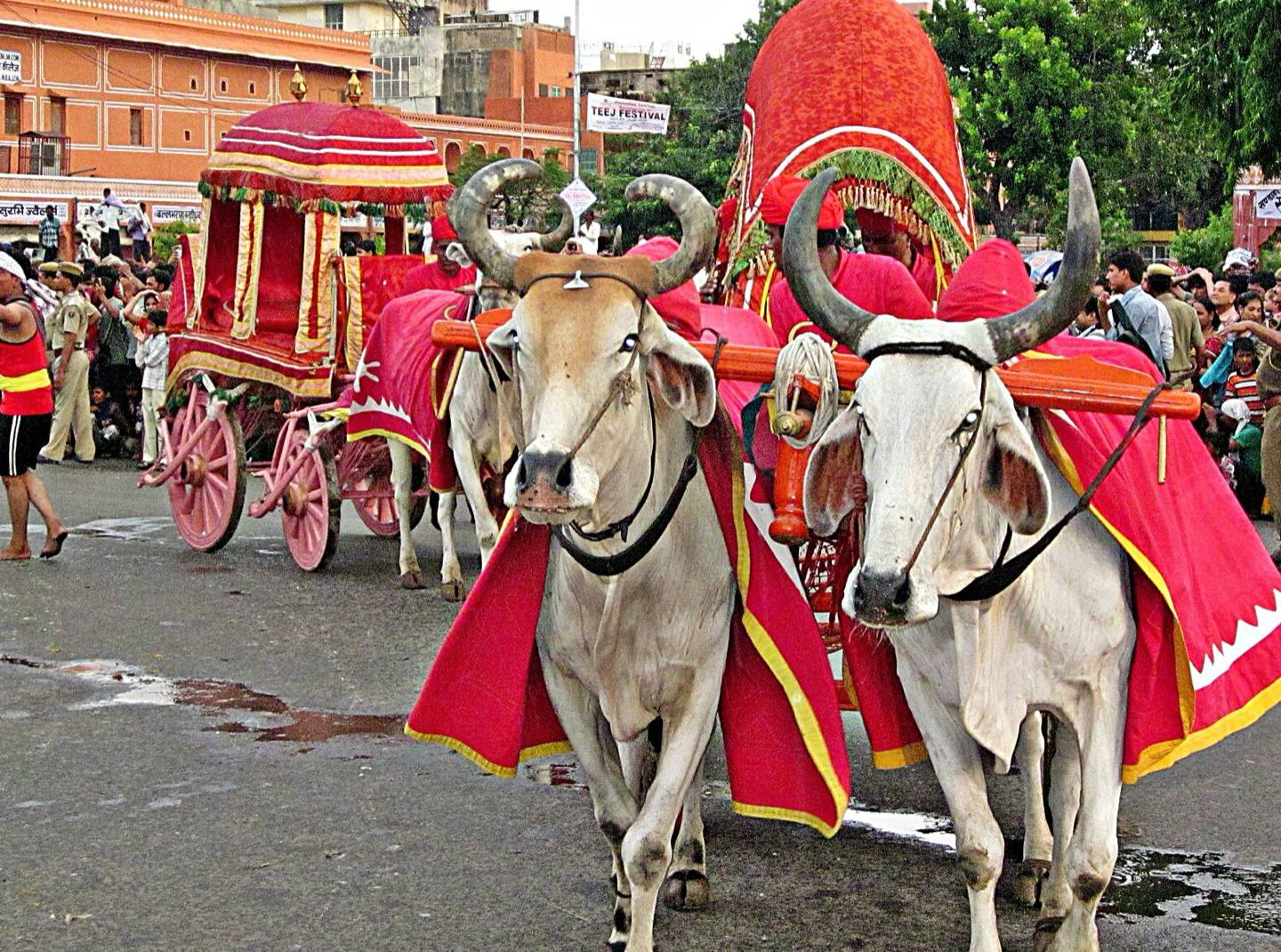
Shravan · July–August
The monsoon festival. Swings hang from trees, hands are hennaed and women wear green leheriya, striped like rain.
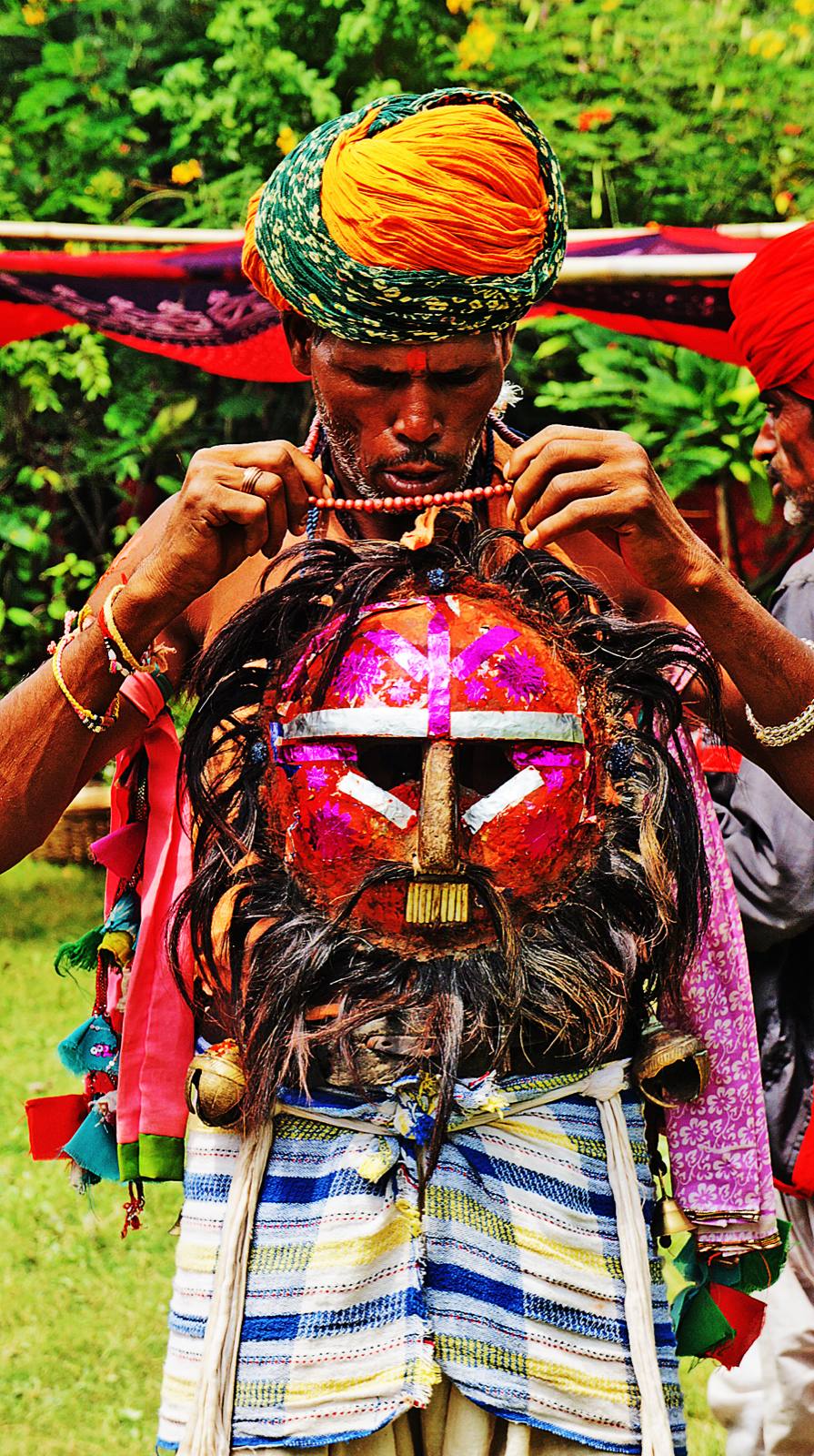
Bhadrapad · after Raksha Bandhan
Bhil communities of Mewar perform a forty-day dance drama from village to village, half ritual and half theatre.
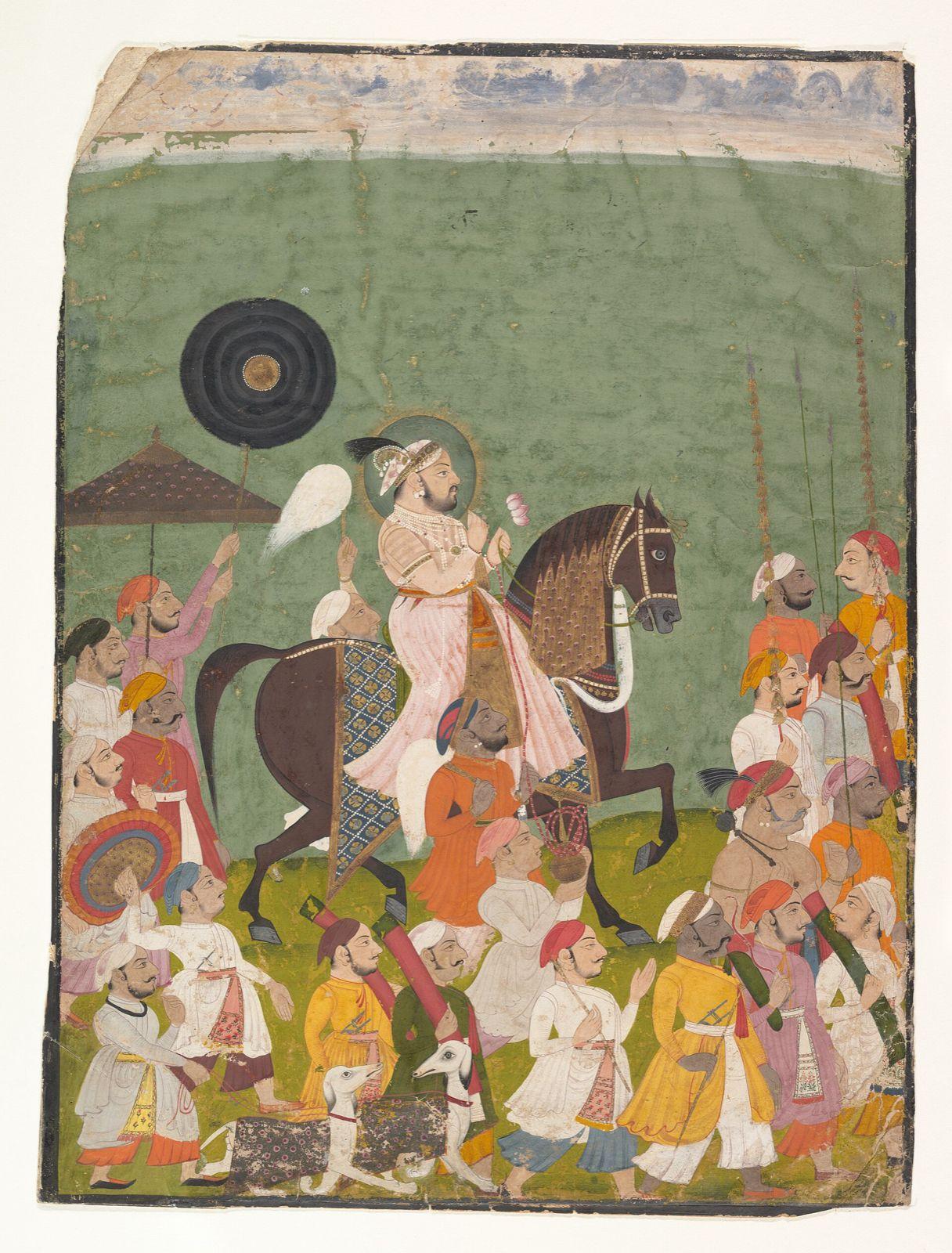
चित्रकला
Painting for the court in bold reds, yellows and lamp-black. Kings at the hunt, ragas made visible, the palace as a flat stage of arches.
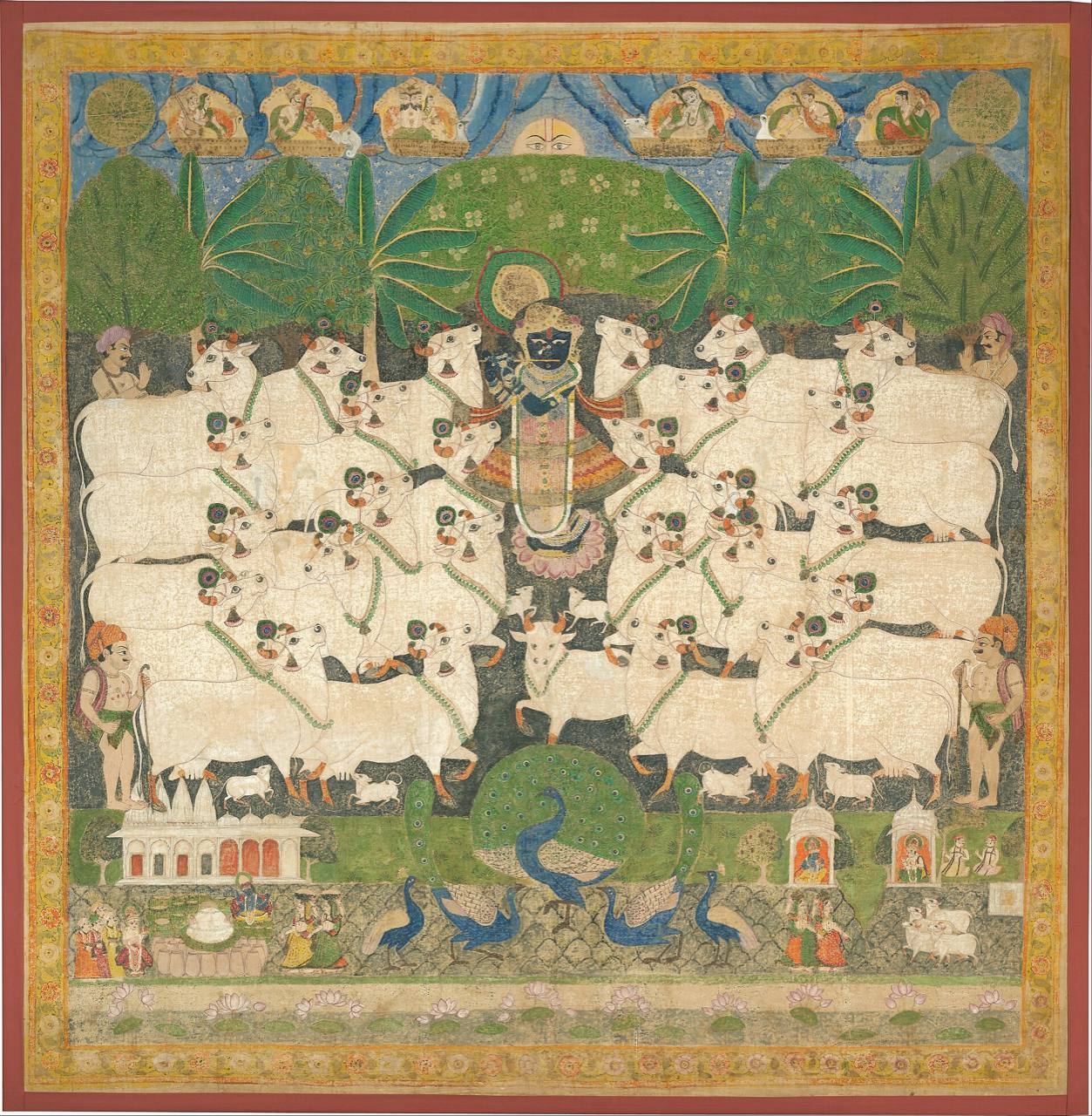
Cloth paintings from nearby Nathdwara, hung behind the image of Shrinathji. Lotus ponds, cows and a sky full of gold.
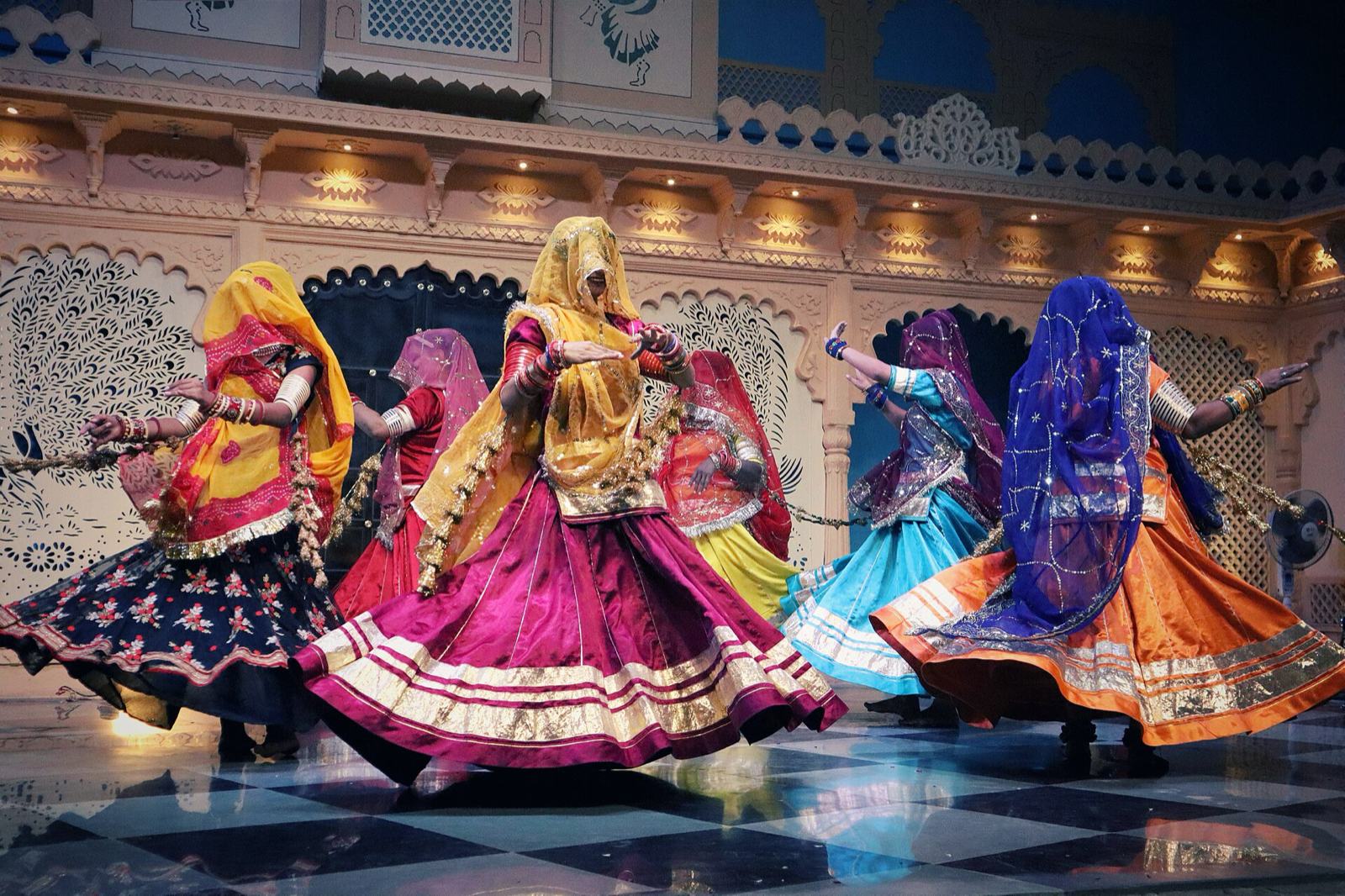
A turning dance in long ghagras. The skirts open like flowers as the circle of dancers spins.
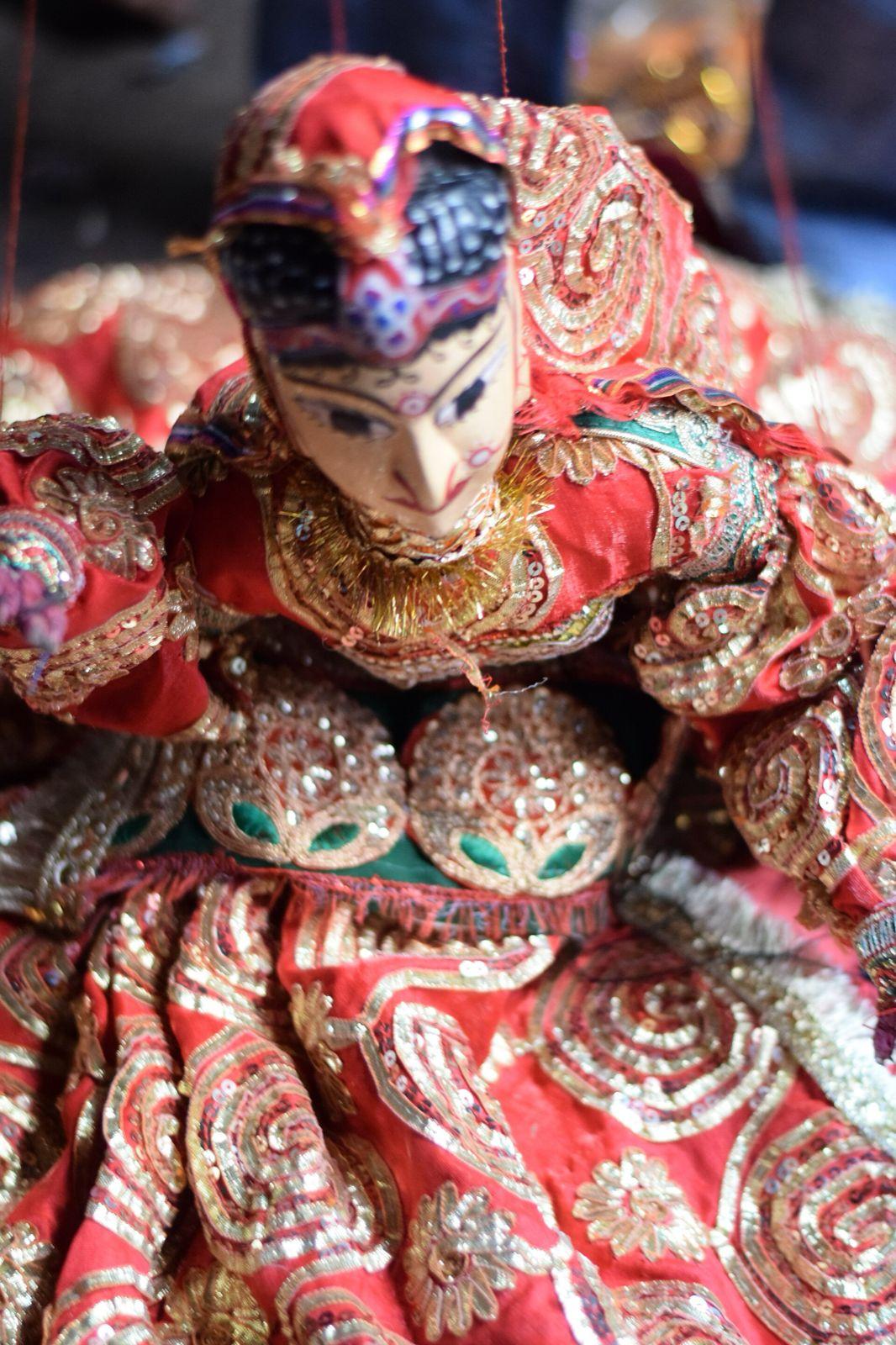
String puppets with carved wooden faces, telling the old ballads of heroes and lovers to the beat of a dholak.
04Foodभोजन
Mewar cooks for a land with little rain: millet, lentils, dried beans, ghee that keeps. Choose a dish from the thali.
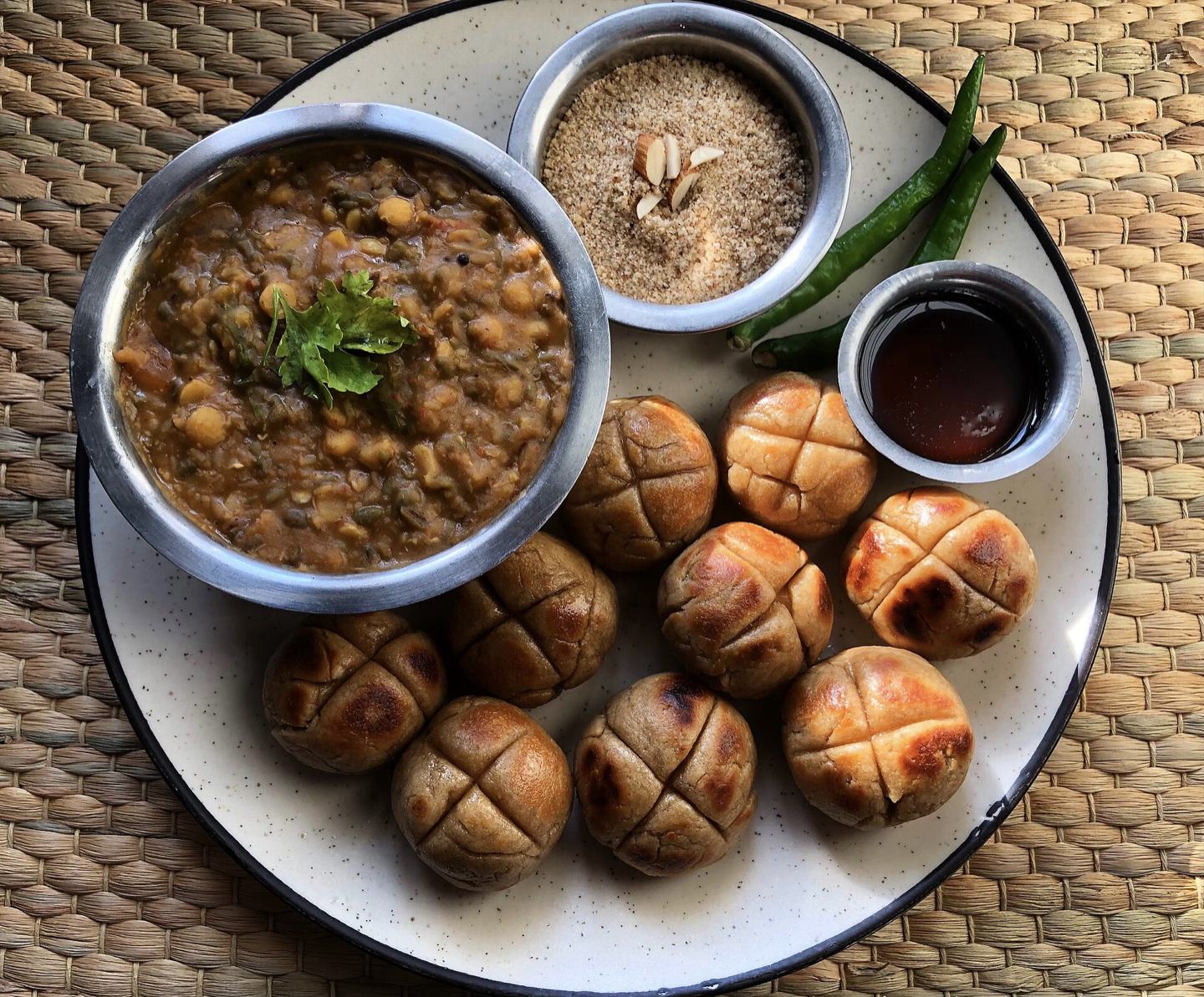
Hard wheat rolls baked in embers, broken into lentils and drowned in ghee. The churma is the same baati crushed with jaggery.
05Traditionपरंपरा
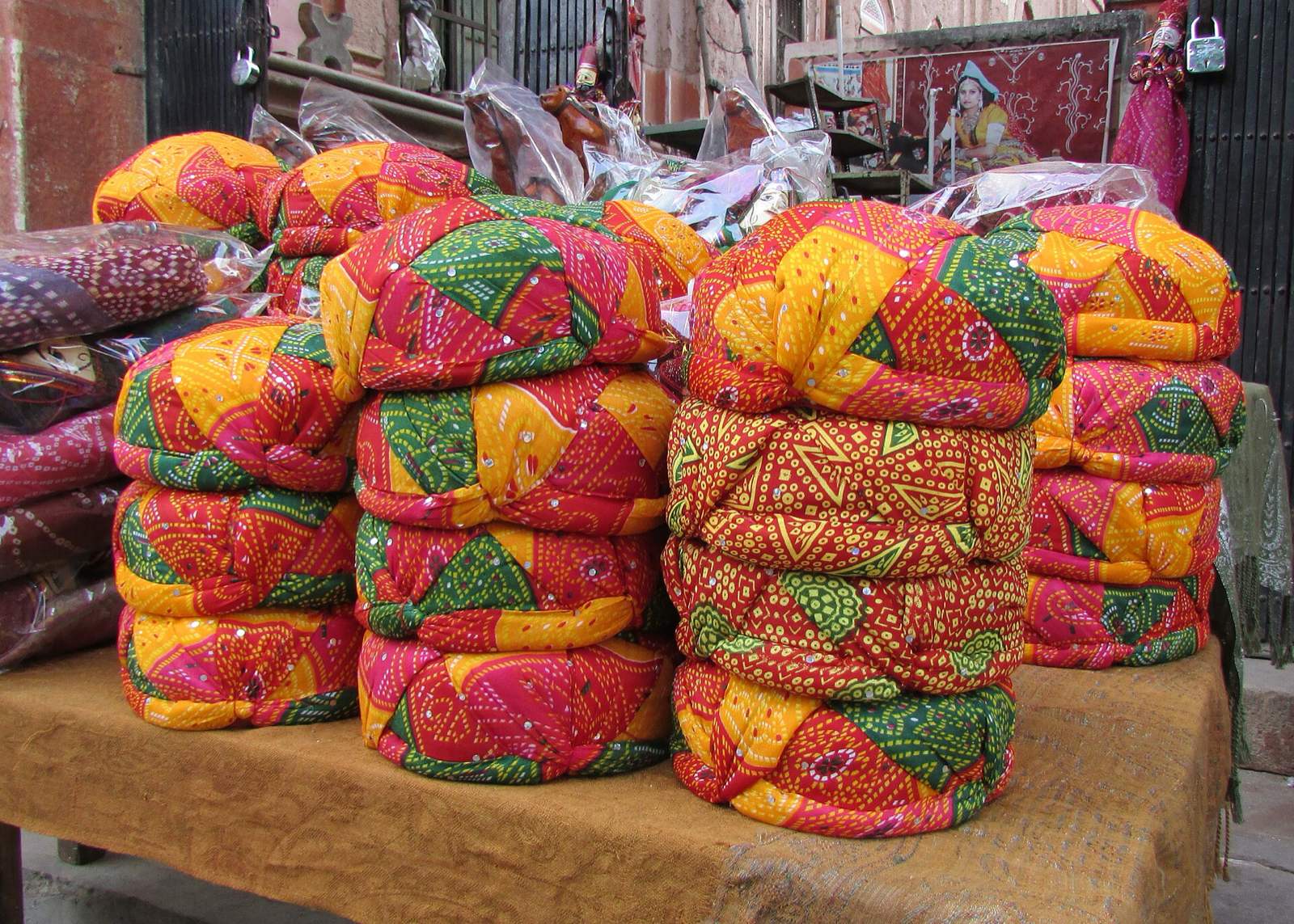
पगड़ी
A turban of up to nine metres. Its colour and wrap tell the season, the occasion and where its wearer comes from.

बंधेज
Cloth tied in thousands of tiny knots before dyeing. Each knot becomes a dot of light when the cloth is opened.
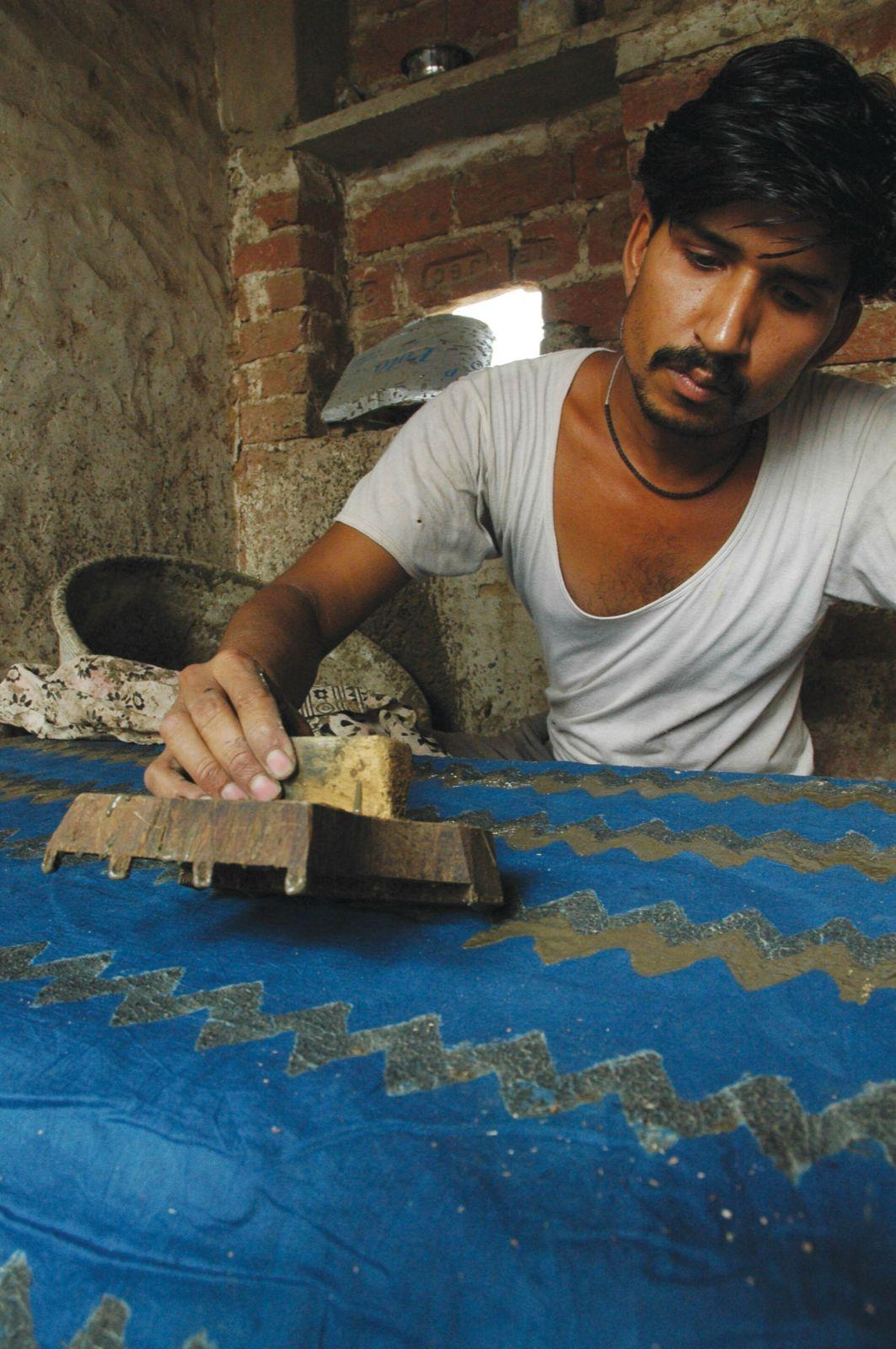
छपाई
Hand-carved wooden blocks stamped onto cloth, row after row. In Mewar's dabu style, a mud paste resists the indigo dye and leaves pale patterns behind.
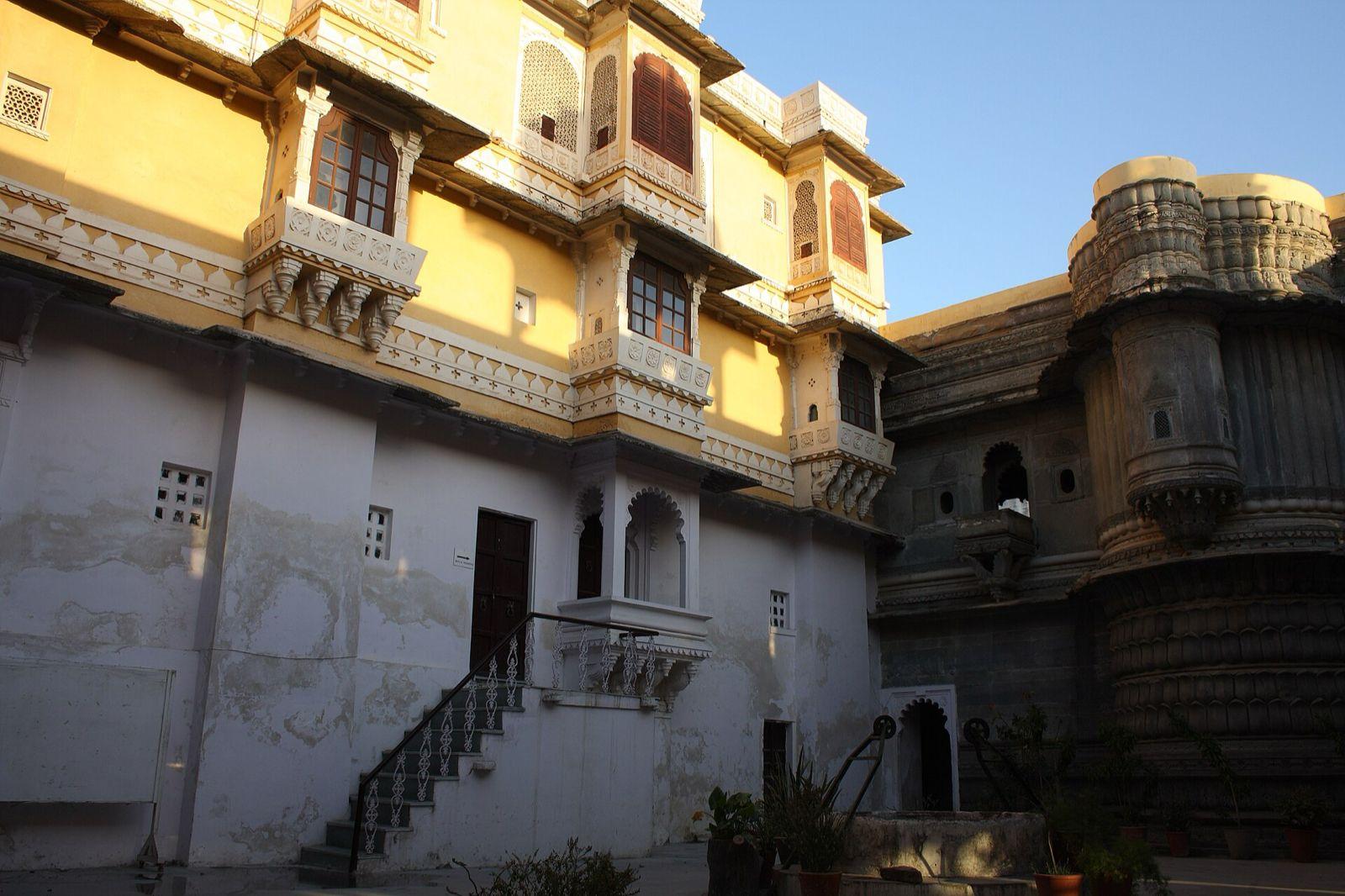
हवेली
Merchant houses around inner courtyards, painted with elephants and horsemen on their gates. Bagore ki Haveli still stands at Gangaur Ghat.